
About us

Rashtriya OBC Mukti Morcha

Vision

According to the directives of the Indian Constitution, the processes of development and public institutions in a democracy should be responsible towards social justice and encourage public participation for the progress of an equality-based nation.

Mission

To organize and mobilize marginalized communities for freedom from social and economic inequality and for fair participation, and to take action and ensure oversight for constructive changes in institutional development processes.

Our Objectives

Organization Founder

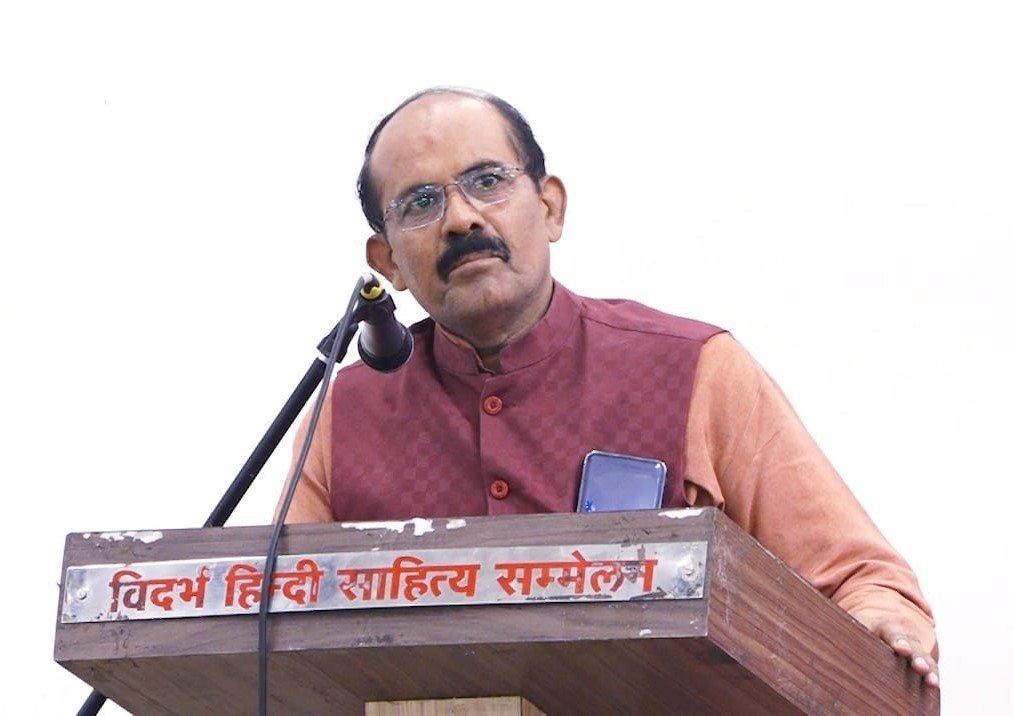
Nitin Madhavrao Choudhary

Before Rashtriya OBC Mukti Morcha

Historical journey of social transformation, ideological struggle, Bahujan activism, anti-caste movements and progressive thought.

1983 – 1987

Rise of Progressive Social Thought

After his student years, the open-minded and supportive family environment that Nitin Choudhary experienced brought him closer to progressive social thought. He gradually began participating actively in social and youth-oriented initiatives.

Through his involvement in women’s movements, campaigns against atrocities on women, and local efforts such as anti-superstition movements, he came under the influence of rationalism, reformism, scientific thinking, and socialism.

“The struggle against caste hierarchy became a central direction of his activism.”
1983 – 1987

Influence of Yaminitai Choudhary

During this period, under the initiative of his elder sister Yaminitai Choudhary, several training camps were organized in Gadchiroli and Nagbhid with the support of voluntary organizations and old associates.

Yaminitai Choudhary was deeply influenced by Gandhian ideology as well as by the activists and ideological processes associated with Jayaprakash Narayan’s Chhatra Yuva Sangharsh Vahini during that time.

Late 1980s

Bahujan Ideological Expansion

Around the same time, Nitin Choudhary’s coordination and active involvement with various urban social groups and movements in Nagpur also increased.

He was particularly influenced by the Bahujan movement, Bahujan Sangharsh led by Nagesh Choudhary, and the growing Dalit street theatre movement in Nagpur.

During this phase, he developed close associations with literary conferences, ideological activities, and social initiatives connected to the Phule-Shahu-Ambedkar ideology.

1987 – 1990

Manusmriti Protest Movement

A large-scale social movement emerged in Nagpur and Wardha against the installation of a statue of Manu outside the Jaipur, Rajasthan High Court.

Campaigns were organized across various squares in Nagpur to symbolically burn effigies of Manu. During these protests, activists frequently faced police obstruction.

Mass Protest & Resistance

Eventually, even the attempt to burn a symbolic copy of Manusmriti at Panchsheel Chowk in Nagpur was stopped by the police.

1988 – 1990

Riddles in Hinduism Controversy

During this period, certain casteist and anti-Dalit groups demanded a ban on Dr. Babasaheb Ambedkar’s book Riddles in Hinduism.

This controversy gave new ideological and social dimensions to movements advocating transformation and equality.

“The fight was no longer only social — it had become ideological.”
1990

Mandal Commission Movement

During the nationwide movements demanding implementation of the Mandal Commission recommendations, social and political movements inspired by Bahujan ideology gained tremendous momentum.

Under the leadership of Kanshi Ram, nationwide campaigns and awareness programs were organized around the slogans "Implement the Mandal Commission" and "Bahujan Rule."

Panchsheel Chowk Protest

A Rasta Roko protest was organized at Panchsheel Chowk in Nagpur where Nitin Choudhary and several activists were arrested by the police.

FORMATION OF MOVEMENT

Formation of the OBC Mukti Morcha Movement

A defining phase in the emergence of an independent and organized socio-political movement dedicated to the rights, identity, and constitutional representation of the OBC community within the broader Bahujan movement.

During this period, the National Union of Backward Classes emerged as an important platform bringing together various political and social leaders working for the rights of Bahujan and OBC communities across the country. The national convenor of this platform was Chaudhary Brahm Prakash.

To press for the implementation of the Mandal Commission recommendations, a national socio-political conference was organized on 22 May 1990 at the Constitution Club in Delhi. Leaders of Bahujan-oriented political parties, Union Ministers, and representatives from various social movements across the country were invited to participate.

Nagesh Choudhary, a prominent Bahujan thinker from Vidarbha and editor of the weekly Bahujan Sangharsh, was also invited to the conference.

“With a conscious effort to establish an independent and distinct socio-political identity for the OBC community, the organized movement known as OBC Mukti Morcha was initiated.”

In this context, Nitin Choudhary, along with activists from various OBC organizations in Vidarbha, participated collectively in the conference.

During the deliberations, they strongly emphasized the need to more prominently raise the issues of OBC rights and the implementation of the Mandal Commission.

With a conscious effort to establish an independent and distinct socio-political identity for the OBC community within the broader Bahujan movement, they initiated an organized movement under the name OBC Mukti Morcha.

In later years, this initiative gained wider recognition as the Rashtriya OBC Mukti Morcha.

National Conference

A national socio-political conference demanding implementation of the Mandal Commission recommendations was held at Constitution Club, Delhi on 22 May 1990.

  • Participation of Bahujan political leaders
  • Presence of Union Ministers
  • National-level social movement representatives
  • Vidarbha OBC organizations participation

Major Leaders Present

  • Chaudhary Brahm Prakash
  • Kanshi Ram
  • Devi Lal
  • Ram Vilas Paswan
  • Nagesh Choudhary
  • Nitin Choudhary

Delegation & Memorandum

A delegation personally met Union Minister Ram Vilas Paswan and submitted a memorandum demanding implementation of the Mandal Commission recommendations.

Birth of an Organized OBC Movement

Through these social, political, and situational developments, the need to give the issues of the OBC community an independent and organized platform became increasingly evident. It was through this collective process that the OBC Mukti Morcha movement was formally established.

EARLY ORGANIZATIONAL ACTIVITIES

Early Activities of the Organization

The expansion of awareness campaigns, Mandal Commission support movements, youth mobilization, reservation activism, and organizational strengthening across Vidarbha and beyond.

Key Timeline

  • 1990 – Mandal Implementation Debate
  • 1991 – Bicycle Rally Campaign
  • 1992 – Supreme Court Judgment
  • 1994 – Maharashtra Reservation Expansion
  • 1994 – Shivaji Maharaj Anniversary Program
  • 1995 – Organizational Expansion
1990

Mandal Commission Movement

During the nationwide movements demanding implementation of the Mandal Commission recommendations, social and political movements inspired by Bahujan ideology expanded rapidly across the country.

Nitin Choudhary actively participated in awareness campaigns, reservation support movements, student mobilization programs, and ideological conferences related to OBC rights and social justice.

“Through awareness, organization, and continuous social struggle, the movement aimed to strengthen constitutional rights and social justice for OBC communities.”
1991

Bicycle Rally & Public Campaigns

A ten-day bicycle rally was organized from Gadchiroli to Chandrapur in support of OBC reservation and implementation of the Mandal Commission recommendations.

Public meetings, awareness drives, rallies, and conferences were organized across Vidarbha to mobilize youth, students, and social activists.

Mass Social Awareness

Several activists, social thinkers, and public representatives participated in the movement and strengthened the organizational structure at the grassroots level.

1992 – 1995

Reservation Expansion & Organizational Growth

Following the Supreme Court judgment upholding 27% reservation for OBCs, awareness campaigns and student guidance programs were organized extensively.

The organization expanded its structure through local branches, workshops, leadership programs, and educational guidance activities related to reservation and admission procedures.

Many activists emerged as important social leaders through these initiatives and continued contributing toward progressive and constitutional social movements.

Constitutional Campaign

Campaign Against OBC Sub-Categorization

A constitutional and ideological campaign focused on protecting the broader social identity of backward classes and preserving the constitutional framework of equality, reservation, and social justice.

Organisation Structure

National Convener
Nitin Choudhary
National Core Committee
  • Ajay Shankar Gupta (Bihar)
  • Jagdishsingh Yadav (MP)
  • Rajeshkumar Gupta (Jharkhand)
  • Rampal Jangda (Haryana)
  • Dr. Abhilashsingh Maurya (UP)
  • Atul Deshmukh (Maharashtra)
  • Adv. Ashok Yawale
  • Adv. Chayadevi Yadav
  • Asalam Shaikh
  • Bhushan Dadwe
Ideological Framework

Reservation as a Social Equality Framework

Nitin Choudhary consistently studied the OBC question from ideological, constitutional, and legal perspectives in relation to social justice and reservation policies.

According to him, reservation is not merely a caste-based provision, but a special constitutional mechanism intended for socially and educationally backward classes recognized by the Constitution.

He argued that Articles 15(4), 16(4), and 46 of the Indian Constitution refer to Scheduled Castes, Scheduled Tribes, and socially and educationally backward classes within the framework of a broader social category or “class.”

Constitutional Base

Backward Classes as a Broader Social Category

He further emphasized that Article 340 of the Constitution refers to socially and educationally backward classes, Article 341 to Scheduled Castes, and Article 342 to Scheduled Tribes, collectively recognizing these communities as broader social classes.

Dr. B. R. Ambedkar, the principal architect of the Constitution, also approached caste and tribal communities from the perspective of social classes.

On this basis, Nitin Choudhary maintained that there is no clear constitutional foundation for creating internal divisions within backward class communities.

Core Arguments

Objective Realities vs. Caste Divisions

According to Nitin Choudhary, the assessment of social backwardness should not be based on subjective or caste-specific parameters, but rather on broader social realities. He argued that attempts to create sub-categories within backward classes could alter the constitutional meaning of “Backward Class” from an objective social category into a subjective caste-based framework. In his view, such division could weaken the constitutional principle of equality.

He consistently stated that the reservation system is designed to provide equal opportunities to all sections within a broader social class on the basis of uniform standards and merit. Therefore, he raised critical questions regarding how sub-categorization would affect merit, selection processes, and equal opportunity principles, and what specific constitutional principles could legitimately justify such divisions.

Socio-Demographic Factor

In his view, the fact that some communities may receive comparatively greater opportunities is linked to demographic factors, educational advancement, and social initiative within those communities. This does not necessarily mean that certain groups are unlawfully depriving others of opportunities. Therefore, instead of dividing the OBC community internally, he advocated strengthening educational and social empowerment across all sections of the backward classes.

Campaign & Timeline

Opposition to the Justice Rohini Commission

Meanwhile, based on the recommendations of the then National Commission for Backward Classes, the Central Government constituted the Justice Rohini Commission on 2 October 2017 to examine OBC sub-categorization.

In opposition to this move, Nitin Choudhary and his associates organized a roundtable conference in Nagpur. Public awareness campaigns were also conducted through pamphlets and outreach material.

In this regard, a memorandum opposing OBC sub-categorization was submitted to the Central Government through Union Minister Nitin Gadkari. Similar representations were also submitted to the Chairperson of the National Commission for Backward Classes, clearly presenting the organization’s opposition to OBC sub-categorization.

Initiatives

Other Major Programs and Initiatives

1. Discussions on the Union Budget (2018–2021)

Between 2018 and 2021, a series of discussions and seminars on the Union Budget were jointly organized by the Rashtriya OBC Mukti Morcha and the Delhi-based NACDOR. These discussions brought together prominent social and political leaders, including CPI leader D. Raja, Janata Dal leader Sharad Yadav, NACDOR’s Ashok Bharti, Rashtriya OBC Mukti Morcha chief convenor Nitin Choudhary, farmers’ leader Pushpendra Singh, Aam Aadmi Party leader Sanjay Singh, Congress leader Shashi Tharoor, Member of Parliament Agatha Sangma, and Annie Raja, along with several scholars and social activists from diverse fields.

2. Marches and Movements for the Caste Census

Various rallies and protest movements demanding a caste census were organized through the Rashtriya OBC Mukti Morcha and allied Bahujan organizations. On 20 January 2021, a major rally titled Bahujan Kranti Morcha was organized at Samudrapur in Wardha district, with participation from Dr. Anil Thakre, Bapu Orade, and Narayan Chinchone. Later, on 27 September 2021, another march was organized at Dabhaura in Rewa district, Madhya Pradesh, under the banner of the Rashtriya OBC Mukti Morcha. The event was coordinated by State President Jagdish Singh Yadav and Bhola Singh.

3. Convention Marking 25 Years of the Mandal Commission Implementation (7 August 2019)

On the occasion of the 25th anniversary of the implementation of the Mandal Commission recommendations, a special convention was jointly organized by NACDOR and the Rashtriya OBC Mukti Morcha at the Constitution Club in Delhi. The event featured the participation of Dr. Suraj Mandal, son of B. P. Mandal, Samajwadi Party leader Rajkumar Bhati, Prof. Ratanlal, Ashok Bharti, and Nitin Choudhary representing the Rashtriya OBC Mukti Morcha.

4. Seminar on Social Justice (19 November 2021)

A seminar on the theme of social justice was organized on 19 November 2021 at the Constitution Club in Delhi. The seminar featured participation from CPI leader D. Raja, NACDOR’s Ashok Bharti, and Rashtriya OBC Mukti Morcha chief convenor Nitin Choudhary.

5. Yuva Samman Parishad – Nagpur (21 April 2018)

The Yuva Samman Parishad was organized on 21 April 2018 at Deshpande Hall, Nagpur, in the presence of Varun Gandhi. The event honored youth leaders and organizations for their outstanding contributions to social work. Through various case studies, Varun Gandhi spoke about positive life values and responsible citizenship.

The successful organization of the event was supported by Rajkumar Tirpude, Dr. Keshav Walke, representatives of the NSS Department of Nagpur University, Adv. Ramesh Kothale, journalist Pradeep Maitre, and Nitin Choudhary.

During the conference, social activists and organizations including Maroti Chaware, the Single Women’s Organization, Mahesh Pawar (anti-liquor campaign), Dr. Shrikant Bhovte (tribal development initiatives), Prashant Dekate (Dalit youth leadership), and Aarti Pankhraj’s organization were recognized for their work against child labour and for broader social causes.

6. “OBC Janatacha Jahirnama” for Parliamentary and Assembly Elections

Ahead of Lok Sabha and State Assembly elections, the Rashtriya OBC Mukti Morcha published the OBC Janatacha Jahirnama (Manifesto of the OBC People). The objective of this initiative was to publicly present the aspirations and demands of the OBC community, create awareness among voters, and pressure political parties to include OBC-related issues in their election manifestos. Through this effort, the organization sought to ensure that its concerns and demands found representation in mainstream political agendas.

7. World Social Forum – Mumbai (2003)

At the World Social Forum held in Mumbai in 2003, Nitin Choudhary participated in establishing the Vishwa Samman Manch in collaboration with NACDOR. A large convention was organized as part of this initiative, with participation from organizations such as NACDOR, Rashtriya OBC Mukti Morcha, Amnesty International, and Dr. Ambedkar Mahasabha.

As part of the campaign for awareness and the demand for the Right to Free Education, a youth bicycle march was organized from Kalka to Delhi. Women’s Honour Forums and Youth Honour Forums were also established across various states to conduct awareness and guidance programs on social issues.

8. Anti-Poverty Convention – Delhi (2005)

In 2005, a national anti-poverty convention was organized at Ramlila Maidan in Delhi, in which Nitin Choudhary actively participated. The convention featured several discussions and seminars on poverty, social inequality, and development-related issues.

Former Prime Minister V. P. Singh attended the event as a chief guest. Additionally, renowned music composer A. R. Rahman delivered a special musical performance to support the campaign for anti-poverty awareness.

National Calendar

Annual National Programs

1. Mandal Day (7 August)

On 7 August 1990, then Prime Minister V. P. Singh announced in the Lok Sabha the implementation of the Mandal Commission recommendations. Under this historic decision, 27% reservation was introduced in Central Government and public sector employment for socially and educationally backward classes (OBCs). This marked a landmark constitutional implementation for the OBC community based on the recommendations of the National Commission constituted under Article 340 of the Indian Constitution.

This day is regarded as highly significant in the context of social justice, representation, and constitutional rights. Therefore, every year on 7 August, Mandal Day is observed through various public programs, seminars, discussions, and awareness campaigns.

2. National and State Budget Analysis

The annual budget is considered a reflection of the government’s development vision, policy priorities, and socio-economic planning. Through the Rashtriya OBC Mukti Morcha, detailed analyses of the Union and State Budgets are conducted every year.

As part of this process, the organization studies the extent to which provisions have been made for the social, educational, and economic welfare of the OBC community. Special attention is given to schemes of various ministries, economic concessions, welfare projects, and development programs to assess whether OBC concerns and representation have been adequately addressed.

The organization has consistently emphasized that the budget clearly reflects how public tax revenue collected from citizens is being utilized. Therefore, it believes that the OBC community must remain aware of the budgetary process, critically examine it, and actively articulate its perspective on policy and resource allocation.

3. OBC Mukti Morcha Foundation Day (22 May)

22 May is observed with special significance as the Foundation Day of the Rashtriya OBC Mukti Morcha. On this day, OBC activists from Vidarbha had organized a historic march in Delhi demanding the implementation of the Mandal Commission recommendations. It was through this movement that the organized journey of the OBC Mukti Morcha formally began.

Since its establishment, the organization has continuously struggled for justice, rights, and constitutional representation for the OBC community. Every year on 22 May, special meetings, seminars, and resolution programs are organized to review the year’s social, political, and educational developments and to determine the future direction of the movement.

4. Constitution Day (26 November)

26 November is observed as Constitution Day to commemorate the adoption of the Constitution of India. The day is regarded as an occasion to reaffirm the values of democracy, equality, social justice, and constitutional morality.

Through the Rashtriya OBC Mukti Morcha, this day is used to review the direction of social and political developments in the country and the state in light of constitutional principles. The organization also evaluates how effectively constitutional values related to social justice, representation, education, reservation, and the rights of marginalized communities are being implemented.

On this occasion, various seminars, lectures, and constitutional awareness programs are organized.

5. First Constitutional Amendment “15(4)” Day (21 June)

21 June is observed as an important day in the context of the First Constitutional Amendment of India. Through this amendment, significant changes were introduced in certain constitutional provisions, strengthening the framework of social justice and the concept of a welfare-oriented democratic state.

This process gave clearer constitutional grounding to the provisions under Articles 15 and 16, particularly Articles 15(4) and 16(4). As a result, policies related to reservation and educational concessions for socially and educationally backward classes received stronger constitutional legitimacy.

On this occasion, discussions and study sessions are organized to review the journey of the OBC community in relation to justice, reservation, and constitutional rights. The programs also examine the achievements made possible through these constitutional provisions, as well as the challenges that continue to persist in the present social and political context.